A Checklist for Planning a Fog-Free UK Road Trip
Fog is predictable if you plan for it. A practical pre-trip checklist covering visibility forecasts,...

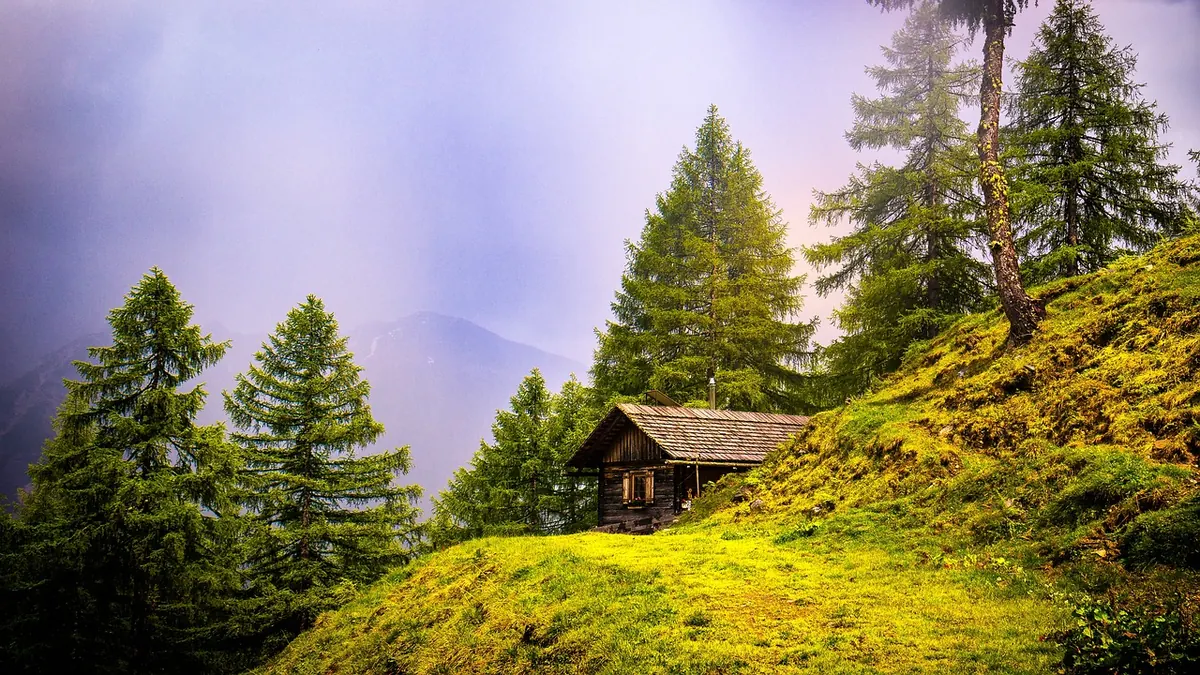
Walk a Welsh hillside on a damp October morning and you come home with water in your hair, your coat and your boots. That water came out of the air. Fog harvesting is simply the business of catching it on purpose — putting something in the way of the cloud so droplets gather, join up and run somewhere useful.
Rain is easy to collect. It falls. Fog does not fall, it drifts, and that is the whole engineering problem. It is also why the question is interesting in Britain, where some of the dampest, hilliest and most awkward places to reach are the same places most often wrapped in cloud.
Fog is a cloud sitting on the ground. Its droplets are measured in thousandths of a millimetre — far too small and light to fall as rain. They hang in the air and only leave it when they touch something. In a wood, that something is a leaf or a conifer needle. In a fog net, it is a panel of mesh.
The point is not to filter fog like a sieve. It is to give the droplets a surface to stick to. Wind pushes the cloud through the mesh, droplets collide with the fibres and merge with their neighbours. Once a drop is heavy enough, gravity takes over and it runs down. After that it is ordinary plumbing: gutter, downpipe, tank, tap.
A standard fog collector is a simple thing. Two posts hold a panel of loosely knitted shade netting, stretched tight. A half-round gutter sits along the bottom edge, angled very slightly so the water runs to one end. A downpipe carries it away to a covered tank.
The mesh is the part that wears out. Sunlight makes the plastic brittle, storms tear panels, and organic grime encourages algae. Expect to inspect it after gales and to replace it every few years.
Fog type matters more than fog amount. Radiation fog forms on clear, calm autumn and winter nights, usually in valleys where cold air drains downhill. It is often shallow and burns off by mid-morning, and its water content is modest — a net will drip, but not dramatically.
Advection fog is the sea fog that swallows North Sea and Channel coasts in spring and early summer, when warm moist air drifts over a cold sea. It can sit there for days. That persistence is what a fog collector wants, and coastal sites in the east and south-west can get long, soaking spells of it.
Hill fog is the third and most promising type. When moist air is forced up over high ground, it cools and condenses into cloud that clings to the slope. Western uplands — Snowdonia, the Cambrian mountains, the Lake District, the Scottish Highlands, the Sperrins — see this far more often than the dry south-east. Freezing fog, by contrast, is best left alone; ice on the mesh blocks flow and adds weight to the frame.
Be honest about the competition. Anywhere with a roof has rainwater harvesting, and in most of Britain a modest roof will out-collect a fog net over a year. Fog harvesting makes sense where there is no roof, no mains supply and no easy way to run a pipe.
The best sites share three features: frequent hill or sea fog, a steady wind of the right direction, and no cheaper alternative. A net in a sheltered Surrey garden will disappoint. The same net on a Cardigan Bay hillside may not.
Yields swing wildly. A collector can run hard for three days and then give nothing for a fortnight. Fog water also arrives with whatever was in the air: sea salt near the coast, dust, pollen, and in urban areas a good deal of grime. On the west coast, salt spray corrodes frames and fittings quickly, so stainless or treated timber lasts longer than cheap steel.
Then there is maintenance. Nets shred in winter storms, gutters clog with leaves, tanks grow algae if light gets in, and a single loose guy rope can put a panel flat on the ground. None of it is difficult, but none of it is nothing either.
And if the water is for drinking, treat it as untreated surface water. Filter it, boil it, and if you plan to rely on it regularly, have it tested. If you are unsure about quality, use it on the garden and keep a bottle of mains water for the kettle.
Begin with one square metre and treat it as an experiment rather than a supply. Face the panel into the prevailing wind — usually south-west in most of Britain — and raise the bottom edge well clear of the ground so you catch moving fog rather than splashing rain. Angle the panel back by ten to fifteen degrees so water runs down instead of dripping straight off.
Fit a gutter with a gentle fall, a downpipe, and a lidded container. A lid keeps out leaves, insects and light, which is what stops algae. Keep the whole thing away from roads, chimneys and anything smoky.
Then measure. Set a jug or a marked stick in the tank and note the level each morning alongside the weather: fog, drizzle, clear. Within a season you will know whether your site is worth scaling up. Most people in Britain find their roof wins on volume — but in the right valley, on the right coast, in the right week of the year, a sheet of mesh can quietly fill a barrel while the rain gauge stays empty. That is worth knowing, even if it never replaces the tap.
Photo: liggraphy / Pixabay
Fog is predictable if you plan for it. A practical pre-trip checklist covering visibility forecasts,...
Why do London's autumn mornings turn misty? Clear nights, the Thames valley, urban particles and still air...
Dew point explains why windscreens mist, grass soaks by dawn and fog swallows the valley — a plain-English...