How Fog Harvesting Works: Could Britain Collect Water from Mist?
Fog nets can pull drinking water out of thin air, but does damp Britain have anything to gain? How the...

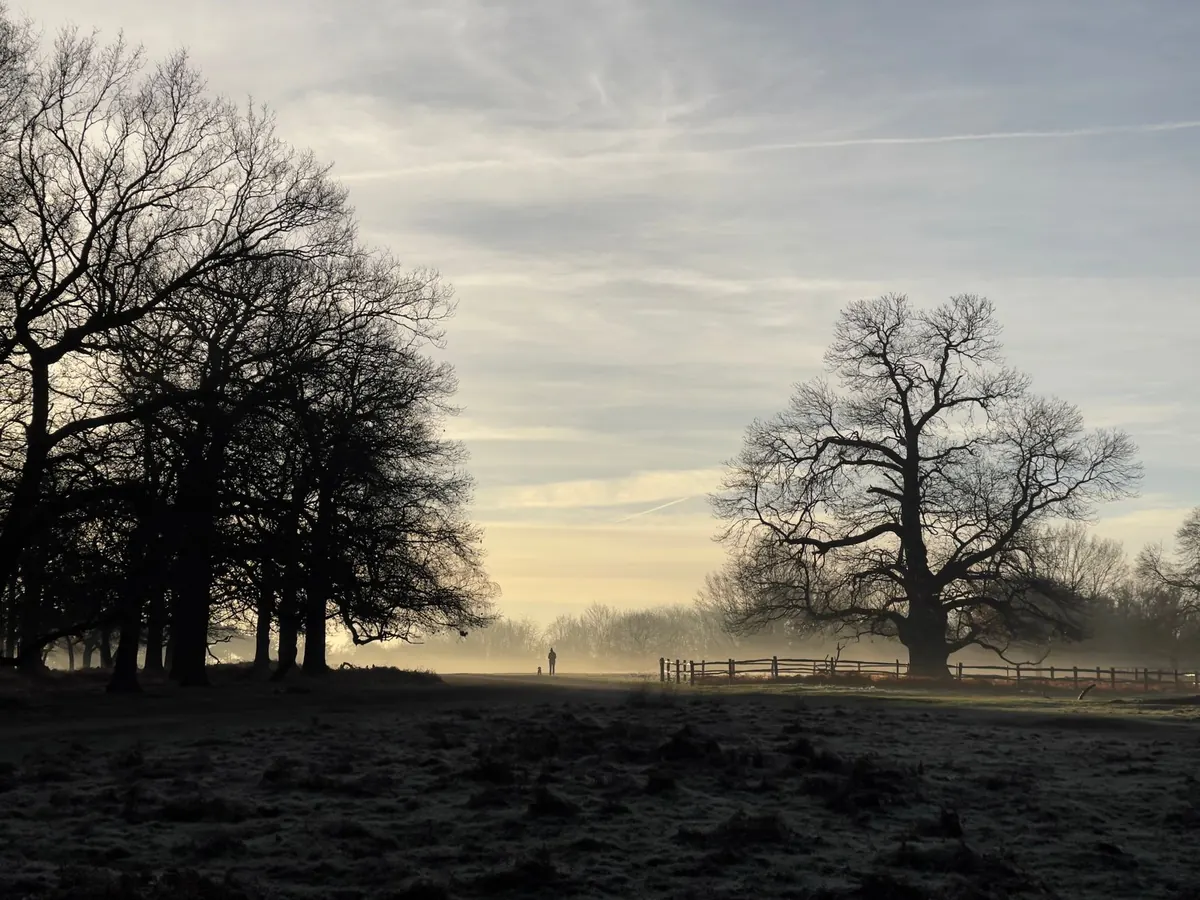
There is a particular sort of London morning in October: the top of the Shard has vanished, the Thames has gone soft and colourless, and the plane trees along the Embankment dissolve into grey. Then, somewhere around ten o'clock, the whole thing lifts and the city is itself again. Fog is not random. On the right night, with the right four ingredients, it is almost predictable — and autumn is when London gets them most often.
Fog is what happens when air near the ground cools until it can no longer hold the water vapour in it. The vapour condenses onto tiny particles, and you get droplets — millions of them — hanging in the lowest few dozen metres of the atmosphere.
Four things need to line up:
Autumn supplies all four. Nights are noticeably longer than in summer, but the ground, the parks and the river still hold the warmth and damp of the preceding months, so there is plenty of vapour to work with. Add a slow-moving area of high pressure, which brings light winds and clear skies, and you have the classic setup. September and October often strike the balance better than deep winter, when the air tends to be drier and the Atlantic more often sends wind and cloud through.
London sits in a shallow basin with the river running through the middle of it, and that geography matters more than most people realise.
On a calm night, air in contact with the ground cools and becomes denser. Like water, it trickles downhill and collects in low ground: floodplains, old marshes, valley floors. That is why the fog is often thickest not in the centre but a few miles out — low-lying ground around Richmond and Barnes, the Lea Valley, and the shallow hollows where several of the airports sit. Heathrow in particular is known for early-morning fog, because it lies in exactly the sort of dip that gathers cold air.
The Thames, its tributaries, and the reservoirs and lakes around the edge of the city are a steady source of water vapour. Fog tends to appear along the river first and spread outwards, thickening over water and the damp ground beside it. On some mornings you can see it as a ribbon: clear above the higher streets, dense along the water.
Water vapour needs something to condense onto. In clean air there are relatively few suitable particles, so fog forms slowly and reluctantly. City air is different. Traffic exhaust, brake and tyre dust, construction work, garden bonfires and wood burning all add condensation nuclei, and so do the tiny sulphate and nitrate particles that form above any large urban area.
More particles means droplets begin forming at slightly lower humidity, and they end up smaller and more numerous. Numerous small droplets scatter light very efficiently, which is why dense urban fog can drop visibility so quickly and look bright white rather than dirty grey.
London's reputation for fog comes from something worse than weather. The Great Smog of December 1952 was a mixture of fog and coal smoke trapped under a temperature inversion, and it killed thousands of people. The Clean Air Act of 1956 changed the fuel the city burns, and that kind of smog disappeared. Today's fog is essentially water droplets. Even so, when an inversion holds a lid over London in November, exhaust and wood-smoke particles accumulate beneath it. If you have asthma, COPD or another lung condition, it is worth checking the air quality forecast alongside the weather, and speaking to your GP or pharmacist if you are unsure what to do on a bad day.
The distinction is a matter of visibility, not mood. The Met Office calls it mist when you can see 1,000 metres or more, and fog when visibility drops below that. In practice, mist is the soft, thinning version you get an hour before the fog properly lifts.
A few varieties you will come across:
Fog is one of the few weather events you can often call the night before. Clear sky, little wind, a high-pressure chart and a forecast dew point close to the overnight temperature: that is your signal.
One more thing worth doing: go out early. The first hour or two of a misty morning, before the city burns it off, is some of the best light London gets all year. Take a camera, walk beside the river, and enjoy it. The fog will be gone by lunchtime — and it will be back soon enough.
Fog nets can pull drinking water out of thin air, but does damp Britain have anything to gain? How the...
Fog is predictable if you plan for it. A practical pre-trip checklist covering visibility forecasts,...
Dew point explains why windscreens mist, grass soaks by dawn and fog swallows the valley — a plain-English...